Evidence Standards & Provenance
High‑quality documentation and transparent sourcing are core principles of the Evidence Atlas. These standards ensure that each piece of evidence can be evaluated, verified, and compared reliably.
Core Principles
What makes evidence trustworthy and usable within the Atlas.

Evidence with Provenance
Every item must include clear origin metadata: who documented it, when, where, and from what source.

Citation Transparency
Sources must be cited explicitly — publications, field notes, archives — so others can trace the information.

Labeling & Interpretation
Interpretations and claims must be labeled clearly as observation, inference, or hypothesis.
Detailed Rules for Submissions
Consistency in how data are recorded and labeled makes the Atlas analyzable and reusable.
Examples of Well‑Labeled Evidence
Visual examples showing how evidence items are captured and labeled in practice.
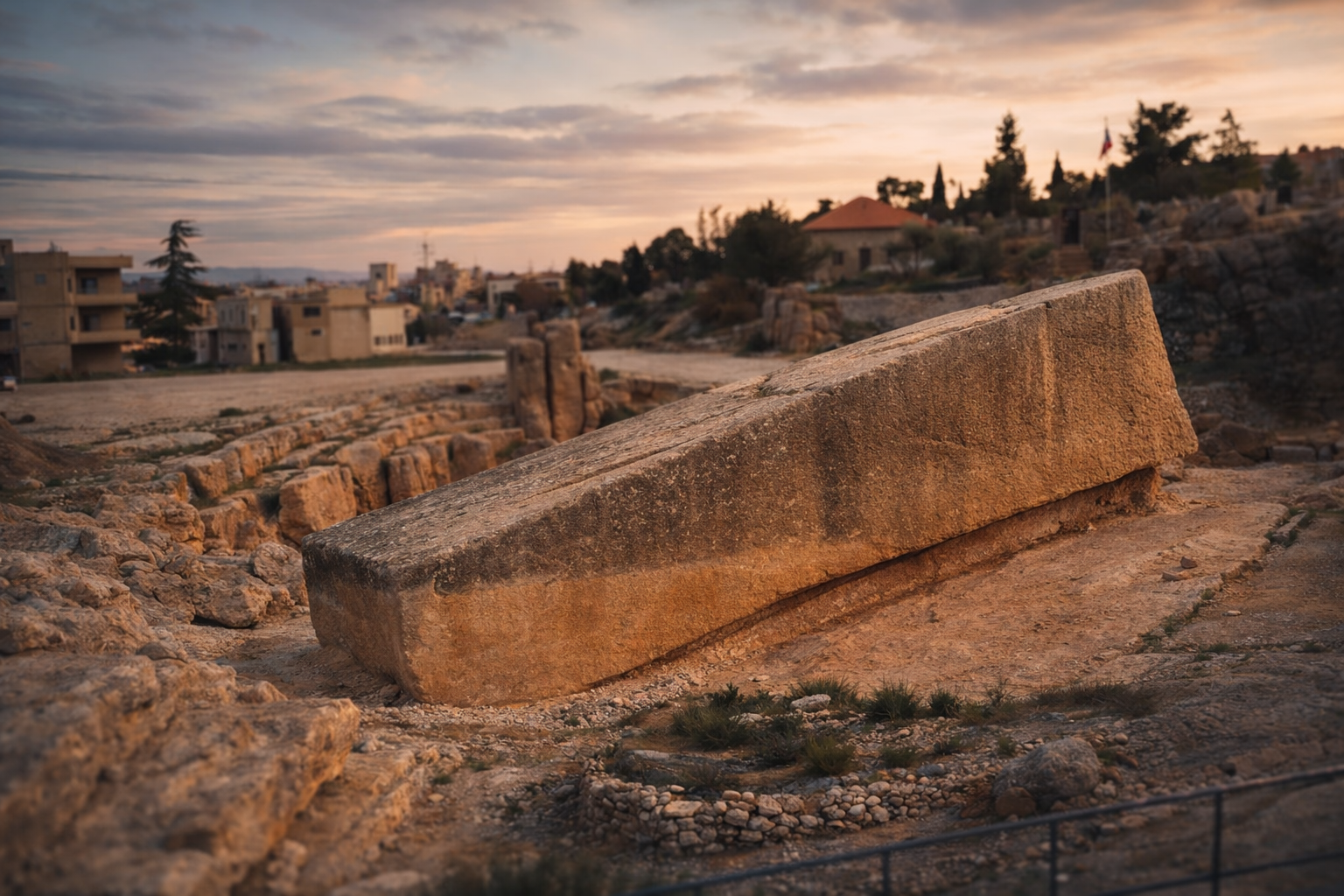
Baalbek Trilithon
Photograph with clear metadata (location, date, photographer) — labeled as primary evidence.
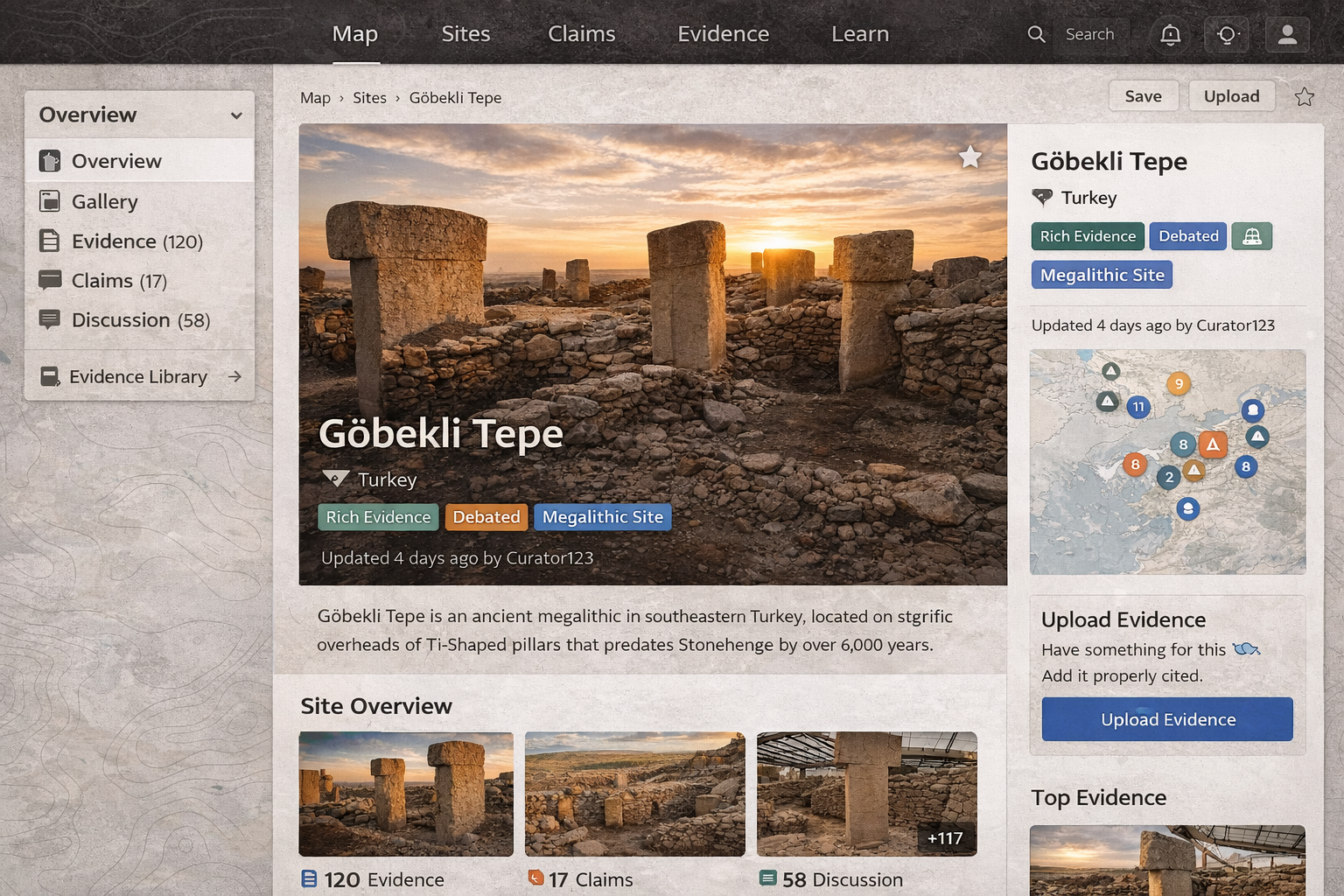
Evidence UI Screenshot
Shows how metadata and labels are displayed alongside evidence items.

Claim Link Example
Evidence linked within a claim thread with clear distinctions between observation and interpretation.